NEW!
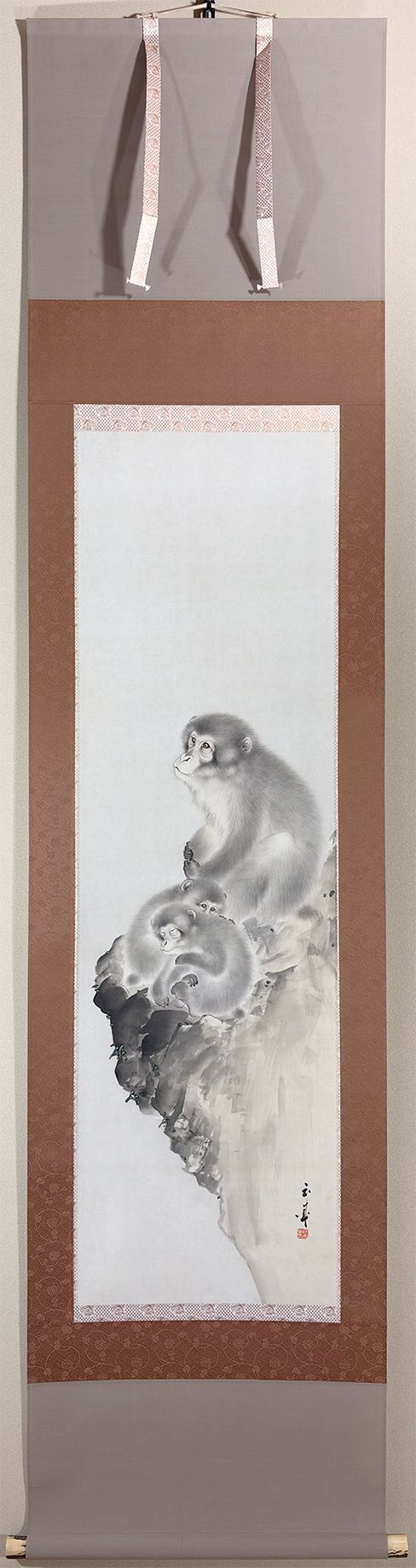
新調表装済
商品番号:5880
親子猿
益田 玉城作
38,000円
ARTIST
明治14年(1881)宮崎県都城(現・都城市)に生まれる。名は珠城。別号は長久堂。
地元で赤池南鳳に絵を学び、のちに同郷の山内多門とともに上京して川端玉章の内弟子となる。明治37年(1904)東京美術学校日本画科選科を卒業し、日本絵画協会・日本美術院の連合絵画共進会や巽画会展に入選を重ねた。明治42年(1909)には川端画学校の教授となり、女子美術学校の講師も務めた。大正4年(1915)の第9回文展に《かの子屋の娘》で初入選して褒状を受け、以後も文展・帝展に入選を重ねた。私塾を開いて門人を育て、大正11年(1922)には多門とともに中国を巡った。昭和6年(1931)に帝展推薦となり、昭和8年(1933)の第14回帝展に《現代隅田川風景》を出品するなど、同時代の女性の装いを描いた。昭和13年(1938)に無鑑査で出品し、昭和19年(1944)の戦時特別文展にも無鑑査で出品するなど、一貫して美人画を描き続けた。
昭和30年(1955)東京で没。享年75歳。
| 出身地 | 宮崎県都城(現・宮崎県都城市) |
|---|---|
| 別号・雅号 | 長久堂 |
| ゆかりの地 | 東京都宮崎県 |
| 師事(師匠) | 川端 玉章 |
| 指導(門下) | 満田 天民 |
| 美術学校 | 東京美術学校女子美術学校川端画学校 |
| 展覧会 | 絵画共進会文展帝展新文展 |
※上記の師弟関係については、当サイトに登録済みの作家のみデータ連携しております。未登録の作家もありますので、実際は上記の限りではない場合がございます。あらかじめご了承ください。
Contact
受付時間 10:00~22:00
※商品のお問い合わせの際は「商品番号・作者・作品名」をお知らせください。スマートフォン・タブレットでご覧の方は電話番号をタップするとそのまま発信いただけます。
PDF形式のファイルをご覧いただく場合には、Adobe Acrobat Readerが必要です。お持ちでない方は下記バナーリンクよりダウンロードください。